This post is part of a series that charts the history of photography since the 1900s. The series takes a decade by decade look at how the skills a photographer needs have changed in light of technological, economic and societal change.
Henri Cartier-Bresson and Photojournalism
One of the most prolific photographers of the twentieth century who also had an affiliation with Surrealism was the French photographer Henri Cartier-Bresson (1908-2004).
Cartier-Bresson is largely remembered for his contribution to photojournalism, however. He captured many world events and leading figures in history, such as Mahatma Gandhi (just prior to his assassination), and the rise of Mao Zedong in China amongst others, and is one of the most prominent figures in the field (Stepan, 2017).
Photojournalism emerged during the Crimean war in the mid nineteenth century where the photographs accompanied the text of a story, but Cartier-Bresson built on this foundation and popularised the form in the twentieth century. This popularity was largely accelerated by the advances made with the portability of cameras themselves, as the smaller and lighter 35mm cameras and flashbulbs of the 1920s became more widespread.
There are parallels between photojournalism and street photography (discussed later in the series), as both rely on that chance moment of being in the right place, at the right time (Gibson, 2021).
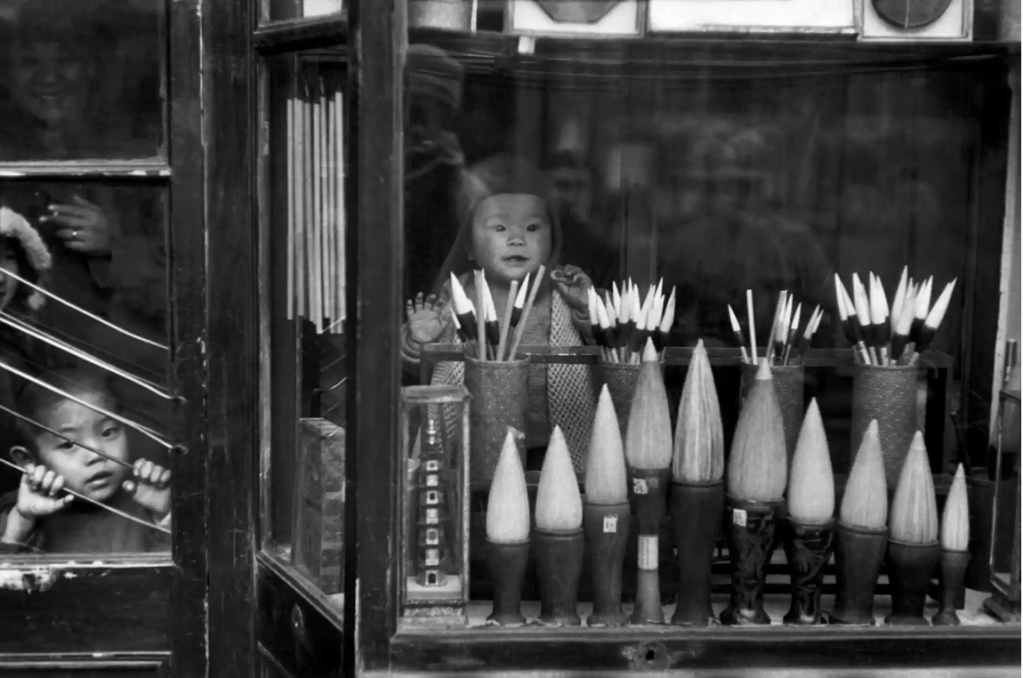
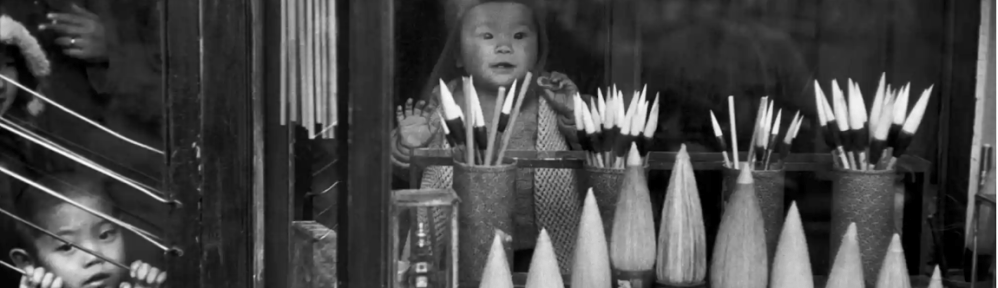
In the image above we can also see the humanist side of Cartier-Bresson. In the image we see two children which could represent the two opposing views towards regime change in China. On the one hand, you have the child on the left who looks like he is imprisoned and sad, yet the expression on the other child is hopeful and looking out of the window at the opportunities ahead. Humanist photography is another facet to photojournalism and often includes a human dimension to the story.
Cartier-Bresson often captured unplanned events on the spur of the moment and was a firm believer in that serendipitous moment of chance, which greatly contributed to his philosophical approach to photography.
In 1952 he published Images a la sauvette (the “decisive moment” in English) which talks about the photographer as a hunter who must prowl the streets and be at the ready at all times to capture the moment on film. In many ways this recalls the element of chance that also played a key role in the earlier Dada and Surrealism movements.
Relevant Photography Skills in the 1940s
- Understanding visual language: Photojournalism uses powerful images (sometimes with accompanying text) in order to tell a story. Adding depth to your images in order to tell a story requires an understanding of visual language and composition. As with Fig. 8 above, it’s important to question the composition of an image and the creative choices the photographer has made, because those choices augment the story.
Interestingly, understanding colour was not important in photojournalism (at least not until the 1970s). Monochrome was the preferred choice for serious photography, such as photojournalism, at least until the 1970s (Smith, 2018).
- Travel: Photojournalism is likely to involve a fair amount of travel. For a modern photographer this means having reliable transport (a driving licence, perhaps, as carrying camera equipment on public transport can be problematic), as well as a valid passport.
- Research skills: A critical approach to research methods, including the ability to navigate and evaluate a range of media sources. Very little is truly original, photography builds on and is informed by precedents; appreciating previous works allows the photographer to apply ideas in new contexts.
‘All photographic series are harvested from research from scholarly investigations to catching an overheard conversation on the bus. Researching a project is as challenging and exciting as taking the photographs, sometimes more so. It frames, informs and focuses the final photographic images. As a photographer, you need the skills and knowledge to be able to nurture the seed of an idea.’
(Fox, 2012)
As Fox attests (2012), ‘scholarly investigations’ form part of a photographer’s research, but inspiration can come from a range of sources. A photographer needs to keep themselves open to fresh ideas and part of that involves active discovery. Visiting libraries, galleries, exhibitions;, reading books and online journals, listening to professionals and going to lectures, even watching documentaries and scouring videos on YouTube, can all provide seeds of inspiration. Thorough research helps the photographer to build a robust research proposal, which in turn could result into job opportunities:
‘ More advanced proposals can be used to apply for funding for particular projects, so being able to produce a successful proposal is a key skill for all photographers.’
(Fox, 2012).
Enjoying the series? Jump back to the 1930s or forward to the 1950s.
References
Fox, A., Caruana, N. (2012) ‘Basics Creative Photography 03: Behind the Image: Research in Photography.’ AVA Publishing SA.
Gibson, D. (2021). ‘Street photography: A history of 100 iconic images.’ Prestel.
Smith, I. (2018). ‘The short story of photography.’ Laurence King publishing.
Stepan, P (2017). ’50 Photographers You Should Know.’ Prestel
 Scott's Unfinished Pictures
Pingback: What skills does a photographer need today? The 1930s | Scott's eLearning Library
Pingback: What skills does a photographer need today? The 1950s. | Scott's eLearning Library
Pingback: What skills does a photographer need today? The 1960s. | Scott's eLearning Library