This week I finally completed the HNC in Photography and handed in my portfolio. I’ve been studying part time for the last two years or so. Overall, it’s been an enjoyable course and I’ve learned a lot. It always feels a little strange when you complete something you’ve been immersed in for a couple of years. On the one hand, I felt relieved to finally finish it, but on the other I felt a little sad that it’s over too.
Blue and white have become the colours that are synonymous with the Greek islands, creating one of the most recognisable landscapes in the world.
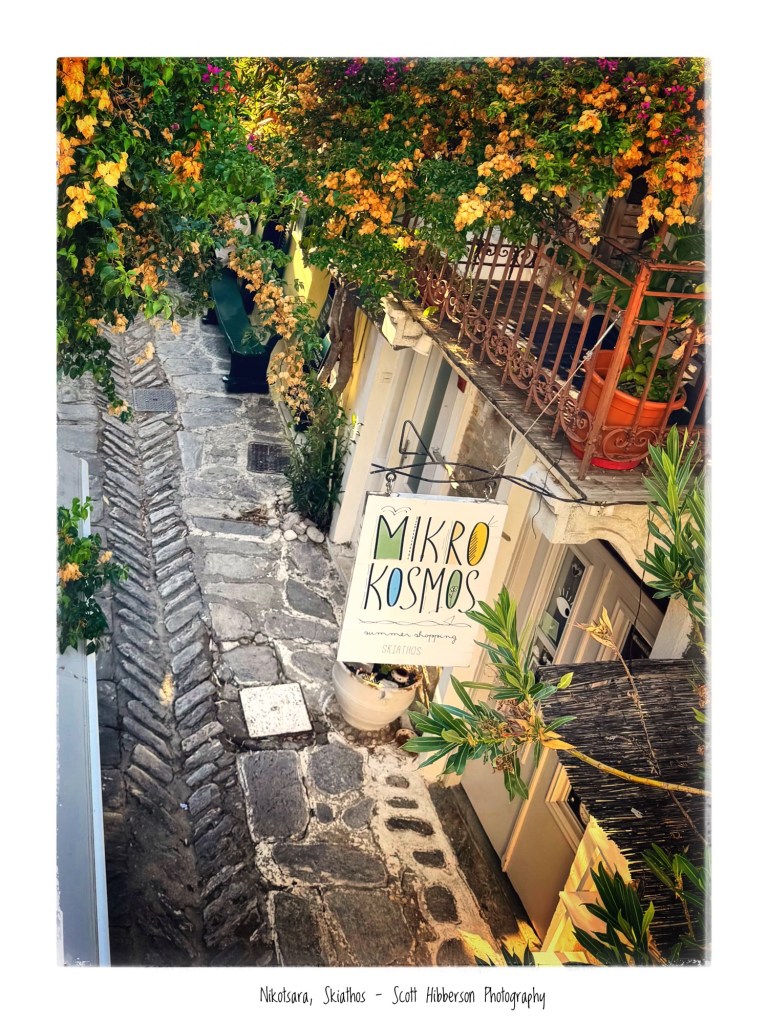
From the winding streets of Skiathos (below) to the whitewashed homes overlooking the Aegean Sea, these colours are more than just a design choice; they tell a story of history, culture, and practicality.
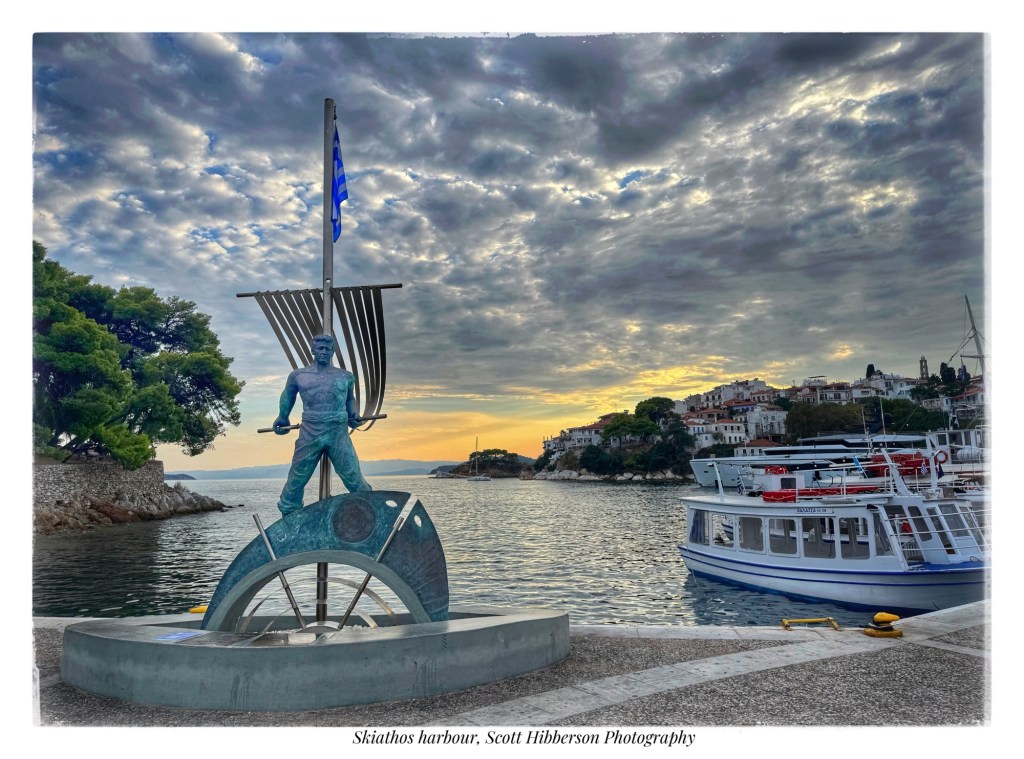
Skiathos, Greece
The brilliant blue reflects the endless sea and sky surrounding the islands, while crisp white mirrors the bright Mediterranean sunlight and scattered clouds above. Together, they capture the essence of Greece’s coastal beauty.
Beyond aesthetics, the colours also carry strong national symbolism. Blue and white are the colours of the Greek flag and have long represented Greek pride and identity. In fact, during the 1970s, the Greek government officially encouraged island homes to be painted in these colours as a symbol of unity and patriotism.
There is also a practical reason behind the iconic look. Whitewashed walls help reflect the intense summer heat, keeping homes cooler during the scorching Mediterranean months.
What began as both a cultural and functional tradition has evolved into a timeless visual identity that continues to attract visitors from around the world.
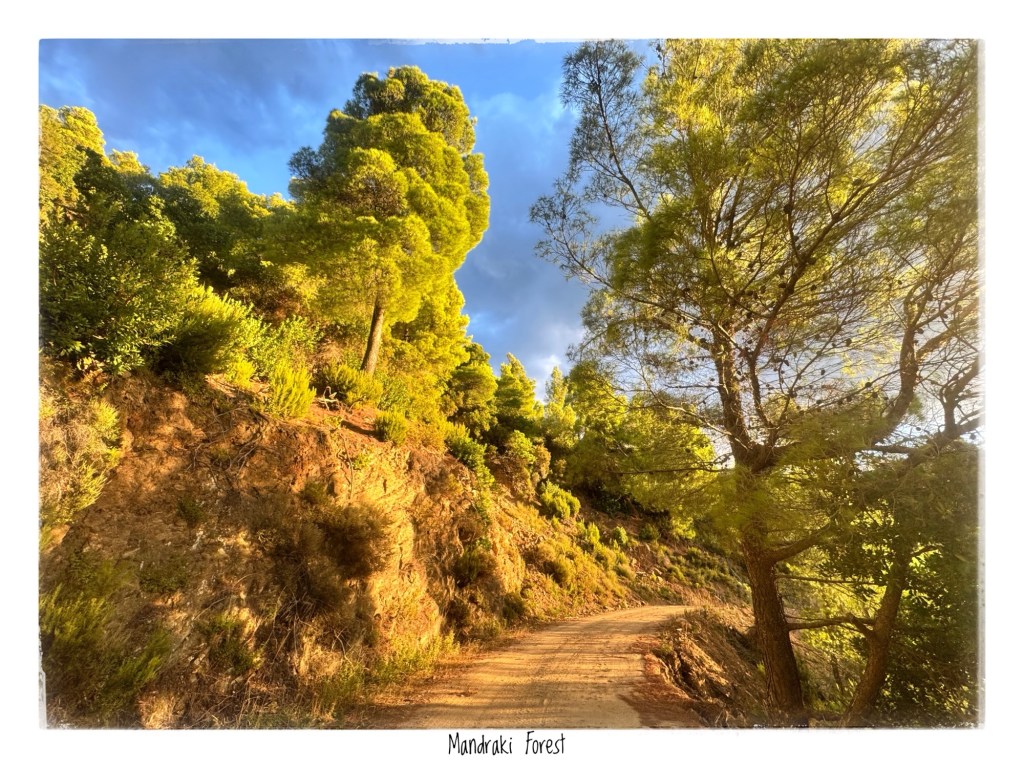
One of my favourite runs in Skiathos takes you through the towering Aleppo pines of Mandraki Forest. An area popular with hikers and it’s easy to see why.
Lines are one of the most powerful compositional tools in photography.
Whether obvious or subtle, they guide the viewer’s eye, create emotion, establish structure, and transform ordinary scenes into compelling visual stories.
Understanding how lines work can dramatically improve the quality and impact of your photographs, regardless of the camera you use.
You don’t expect a brown hare to run across the path right in front of you. I think the hare was as startled as I was to find someone else walking in the woods at such an early hour.
I’ve been dabbling with Lightroom recently to explore which settings work well when taking photographs of birds, and I want to share what I’ve learned along the way. Taking photographs of birds can be very rewarding and very frustrating, in equal measure.
It doesn’t always pay off, but sometimes it does, and today was one of those days. I’d waited patiently outside Bluebell Wood for about fifteen minutes, just listening to the birds with my camera. I could hear common chiffchaffs, song thrushes and even the occasional bullfinch, but none of them were in view to take a good photograph.
Then, as if by magic, a goldcrest landed on a branch a few feet away. It was almost as if it were chirping: “I know you’ve been waiting patiently for a good shot, so here’s your chance!”
Love this shot for the framing and the way the bird is looking at me. Did it really pop down just to reward my patience?