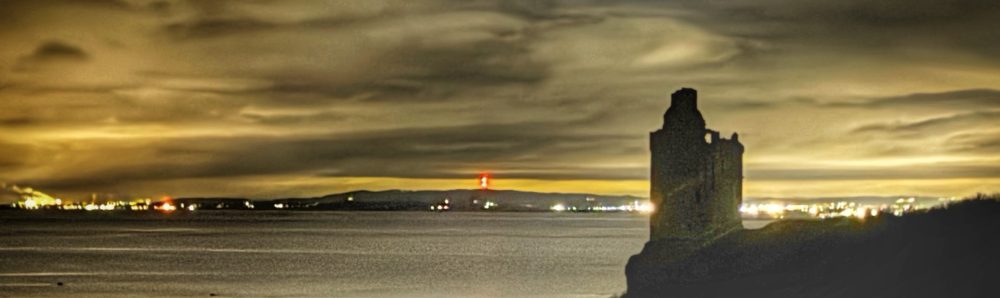
This post is part of a series that charts the history of photography since the 1900s. The series takes a decade by decade look at how the skills a photographer needs have changed in light of technological, economic and societal change.
Street Photography
Street photography gained momentum in the 1960s, although the origins of street photography as a sub genre is difficult to pinpoint. This is due to the nebulous definition of what constitutes street photography.
Many photographers have a claim to being a street photographer, if you take the definition in its broadest sense. Photographing people and places on the street dates back to the nineteenth century. However, if we take Gibson’s (2021) more nuanced definition of street photography, we can begin to get a clearer picture of what street photography entails:
‘Street photography is ordinary life depicted in public spaces. From the street and the metro to parks and art galleries, anywhere outside your front door. It is often surreal and sometimes edgy. It might be humorous, either lightly or darkly. The adjectives can run to elegant, beautiful and weird.’
(Gibson, 2021).
For Gibson, street photography does not need to include people (though it can), or even be taken on the street. The word “edgy” strikes a chord though. There’s an urban chic about street photography – it’s cool and streetwise, which suggests a similar set of skills on behalf of the photographer in order to master it.
Ernst Haas was prolific during the 1950s and 60s in New York. His groundbreaking use of shutter speed to create a sense of motion on the busy streets of New York produced numerous images that could be described as ‘edgy.’
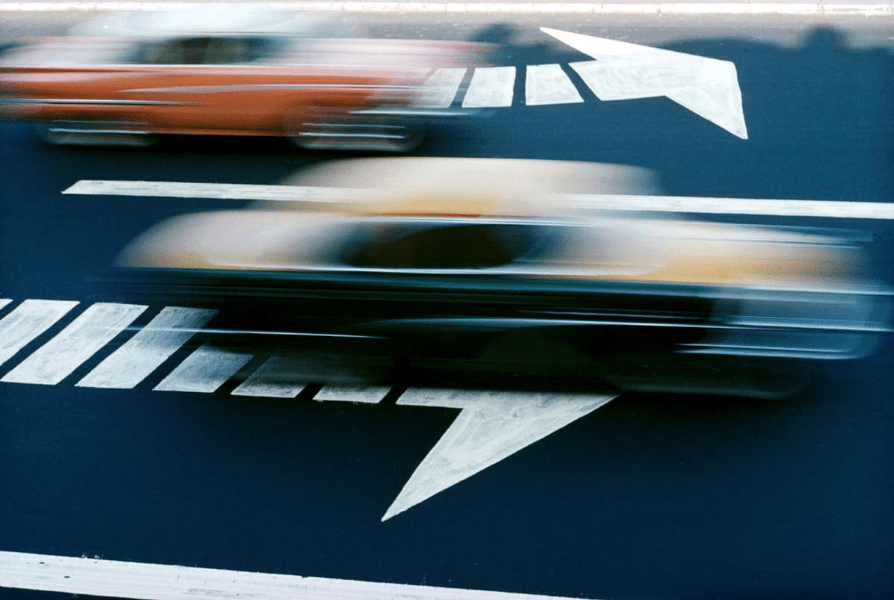
In the image above, Traffic, NY, we can see many of the hallmarks of Haas and, more broadly, street photography. Haas captures two cars speeding past on the streets of New York. Images often include leading lines to draw the viewer’s gaze to a particular spot or in a set direction. The leading lines of the white arrows stand out and match the direction of the speeding cars perfectly. Framing the shot to include the arrows and achieving the right amount of blur to keep the moving cars in shot would have required a precise attention to shutter speed.
The New York photographer Garry Winogrand experimented extensively with street photography in the 1960s and 70s, seeing the streets of New York as a social commentary on the American way of life. Winogrand started his career as a freelance photojournalist and worked in advertising photography
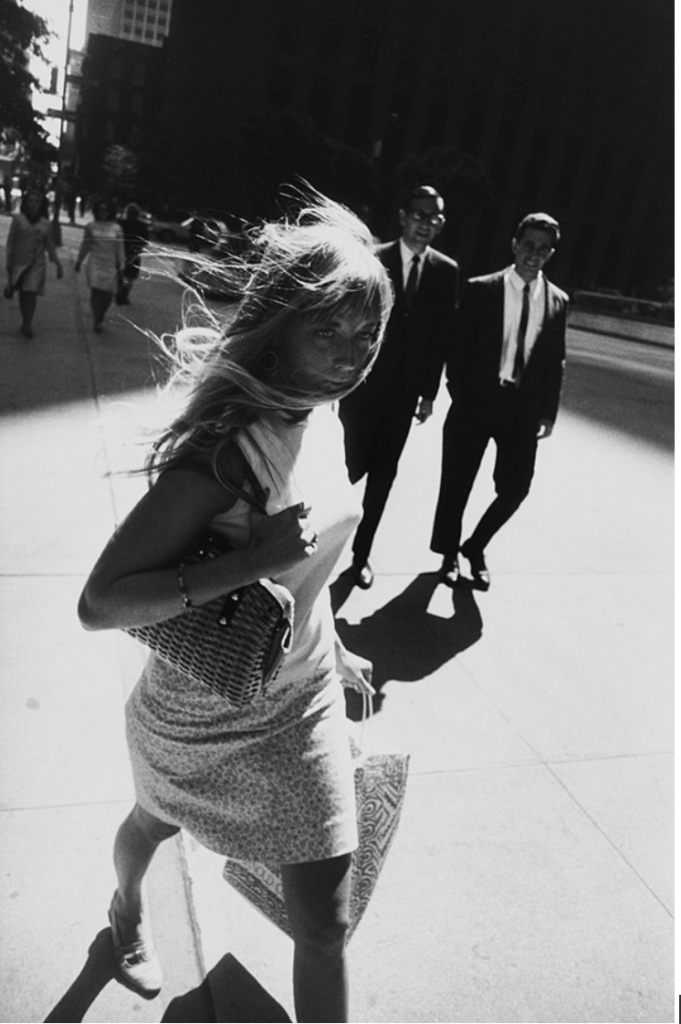
Winogrand’s photographs of street life in New York (and also in California) show his whimsical and playful side, where he often tilts his images (see image above) and catches people spontaneously going about their everyday lives. Winogrand went on to teach photography at numerous colleges and universities and his influence on more contemporary photographers continues to this day. There’s an element of prowling the streets with your camera and waiting for the right moment to get the perfect shot in street photography.
Relevant Photography Skills in the 1960s
- Flexible approach: Unexpected challenges often arise with street photography and it’s important to adapt as and when needed. Photographing subjects on the fly can be problematic.
Photographing subjects on the street is not a controlled environment like a studio. Anything could potentially happen to make the photographer rethink the shot, such as someone photobombing in the background, or someone walking in front of the camera. However, if the photographer overthinks the shot and takes too long they may miss out on the opportunity altogether.
This equally applies to the previous discussion around photojournalism too (1940s).
- Understanding legal and ethical issues: Fox (2012) stresses that there are a number of legal and ethical considerations to consider too:
‘Photographing subjects you encounter on the street can be considered intrusive and raises a number of ethical – and even legal – considerations around privacy and permission. Laws relating to photographing people in public places vary across the world, so you should familiarize yourself with the laws where you are working. You may need to obtain written permission, in a model release form, to use a person’s image.’
(Fox, 2012).
One recalls Sontag’s later assertion that “To photograph people is to violate them,” (Sontag, 2014), implying that the photographer must always be mindful of social barriers and people’s right to privacy. Having access to model release forms and an understanding of laws relating to photographing people in public places is a key skill.
Enjoying the series? Jump back to the 1950s or forward to the 1970s.
References
Fox, A. and N. Caruana (2012) ‘Chapter 1: Planning’ in Fox, A. and N. Caruana Basics Creative
Gibson, D. (2021). ‘Street photography: A history of 100 iconic images.’ Prestel.
 Scott's Unfinished Pictures
Pingback: What skills does a photographer need today? The 1950s. | Scott's eLearning Library
Pingback: What skills does a photographer need today? The 1970s. | Scott's eLearning Library