Introduction
It’s a bit of a myth that the telltale signs of generative AI in writing can be seen in the writing style. You’ve probably heard: “Writing done by generative AI lacks an authentic voice,” “You can tell the difference between AI and a human’s writing” and “you just need to compare with the author’s usual style of writing to see the difference.”
Well, maybe in some cases …
However, as generative AI becomes ever more sophisticated and ubiquitous the claims are harder to substantiate. What if the author has simply rephrased certain paragraphs using tools like Grammarly that have AI embedded within them? I used the AI assistant in WordPress to help put together this post. Does that take away from my authentic voice? What if there’s nothing to compare the writing against? What if the author has no style …?
But I digress. This is not a post to illustrate how you can (or can’t) spot writing created with generative AI.
I want to explore how content generative AI produces can help bring a subject alive. Content created with an insight into how generative AI works can improve writing. It can also help develop the learners’ critical thinking skills.
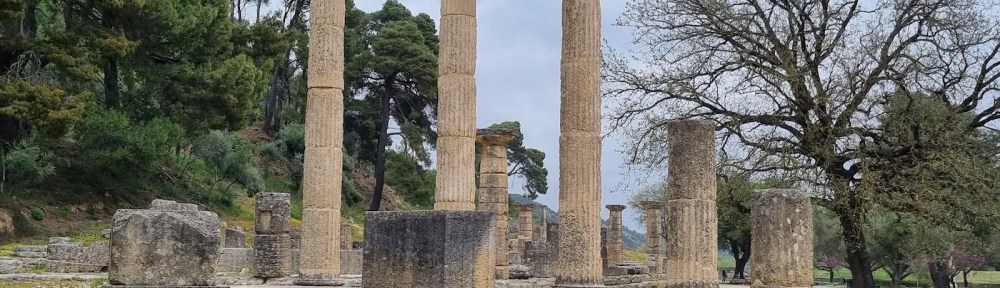
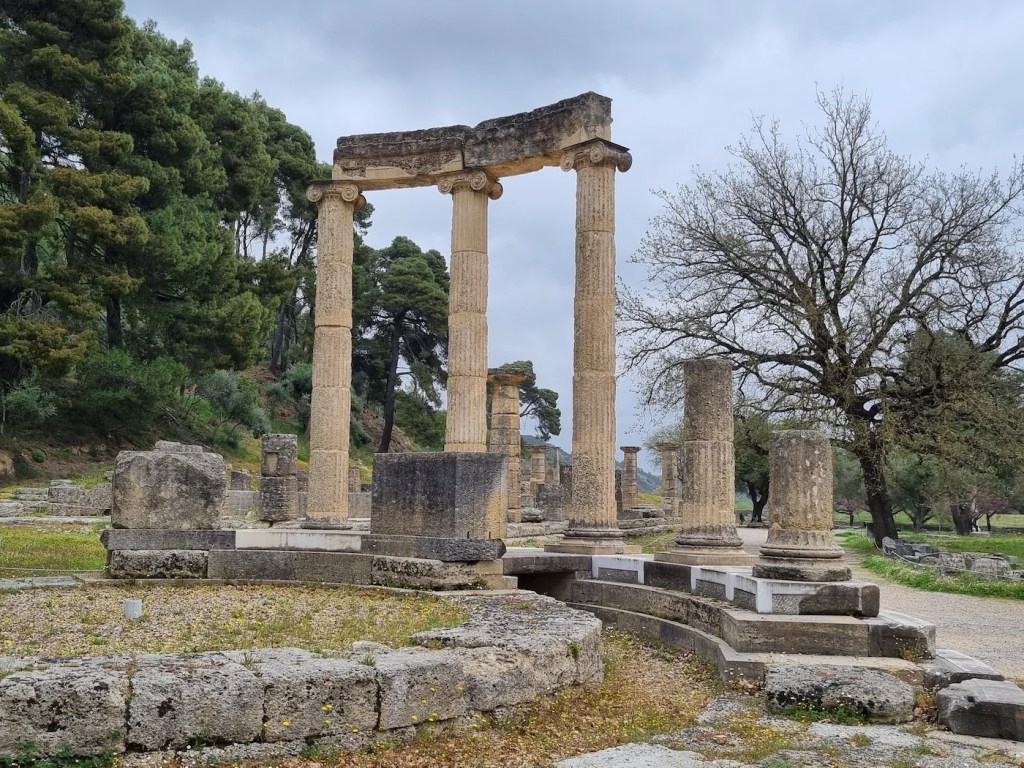
Let’s delve into a different kind of myth: the start of the Olympic Games in 776 BCE in Greece. I chose this topic because I was visiting the site on holiday. You could apply this same approach to any topic. Sure, generative AI can create a set of multiple-choice questions on a given topic in an instant. But what if you want to test learners on a deeper level?
Prompting
This activity involves getting your learners to critique your chosen topic with the aid of a piece of generative AI-produced content.
First of all, I started by prompting ChatGPT to list ten facts about the ancient Olympic Games in Greece. Simple enough. According to a recent article in The Guardian (July 2023) learning how to interact with ChatGPT and its rivals so the output matches your expectations will soon be a key office skill.
Reading ten facts about a topic is dry. The art of interacting with chatbots, like ChatGPT, is about iterating and refining your prompts.
Think of it as more of a conversation than a standalone question: You pose a query, and if the response partially meets your expectations, you refine the query based on the response, and so on.
Personas
One approach advocated by The Guardian article above is to consider personas. Tell the chatbot to write the response in the style of a particular genre or person.
This is when I refined the output by asking ChatGPT to write the facts in the style of an ancient Greek poem. If your topic was History, you might use a famous historical character. For English literature, you might adopt the persona of Shakespeare, and so on.
I later refined a prompt about Greek philosophy in the style of Socrates talking to one of his students and the list of facts were transformed into a dialogue. You get the idea.
The ten facts about the Olympic Games become hidden in something that is more engaging to read than a dry list.
Ode to Olympia
In the land of Olympia, where gods hold sway,
A tale of ancient Games in poetic array.
Heracles, hero, to Olympus did call,
Zeus, king of gods, he sought to enthrall.
In the year seven hundred and seventy-six,
Emerging from myth, in Olympiad’s mix.
Nude athletes, their bodies exposed,
With olive wreaths, their triumphs composed.
Stadion’s thunderous races, a chariot’s flight,
Long jumps in the sand, and discus’ graceful flight.
Ekecheiria’s truce, a sacred vow,
Ensured safe passage, as time would allow.
Married women, veiled from this sight,
Unwed maidens, hearts filled with light.
Athletes came from Greece’s farthest reaches,
For the Games’ glory, their spirits as teachers.
Twelve centuries they flourished, in history’s book,
Olympic ideals, in every nook.
Yet Theodosius, in an emperor’s command,
Brought the ancient Olympics to a mournful end.
Now, remember this tale, in a Greek tragedy’s grace,
The Games of old, a vanished embrace.
In honor of gods, and heroes of yore,
The ancient Olympics, forever we’ll adore!
Developing critical thinking skills
Using generative AI as a means of getting learners to critique their subject can be far more effective than creating simple quizzes.
Take these tasks based on the AI-produced content above (created by further prompting and refining), for example:
- Read the poem and identify key themes or messages conveyed in the verses. List at least three themes and provide a brief explanation for each.
- Research and clarify the words “Olympiad” and “Ekecheiria.” What do they signify in relation to the games?
- Identify five key facts about the Olympic Games from the ode.
- Select a stanza from the poem that you find most impactful. Write a short essay explaining why you chose it, and what it tells us about ancient Greek society.
I don’t think the Ancient Greek poets would feel threatened by the poetic prowess of ‘ChatGPTacles.’ However, generative AI can be a wonderful tool for learning if you know how to get the most from it.
If you use it at a superficial level, you’ll get superficial results. But by being creative with personas and the questions posed to students you can enrich learning activities with AI-produced content.
(By the way, if you ever get the chance to visit the ruins at Olympia, do it, you won’t be disappointed).
 Scott's Unfinished Pictures