I visited Papplewick Pumping Station over the weekend for the annual steampunk gathering and I don’t think I’ve ever seen so many photographers in one place. It’s fantastic to see the event grow from strength to strength over the years and explode in popularity.
Seriously, the photographers were almost outnumbering the cosplayers! So, what is it about steampunk that photographers love?
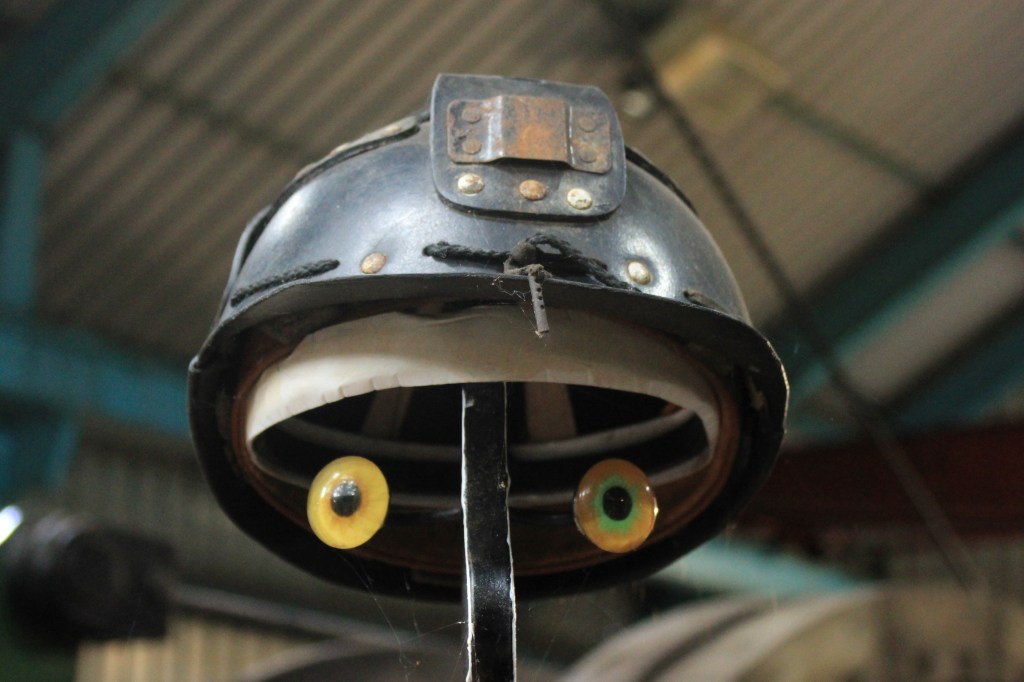
Victorian nostalgia
There’s a sense of Victorian nostalgia that typifies steampunk. Photography has been obsessed with social documentary since the early days of Eugène Atget.
Back in the 1900s, Atget would often venture out into the streets of Paris in the early hours when few people were around and use long exposure times, so that if people did happen by, they appeared as nothing more than ethereal spectres (Stepan, 2017). This reflected the transience of the times. Atget’s Paris was slowly dying, but his photography is, in many ways, an attempt to immortalise its passing.
That’s part of the allure of photography. Aren’t we all taking photographs, at least in part, to preserve that fleeting moment in time?
Quirky fashion
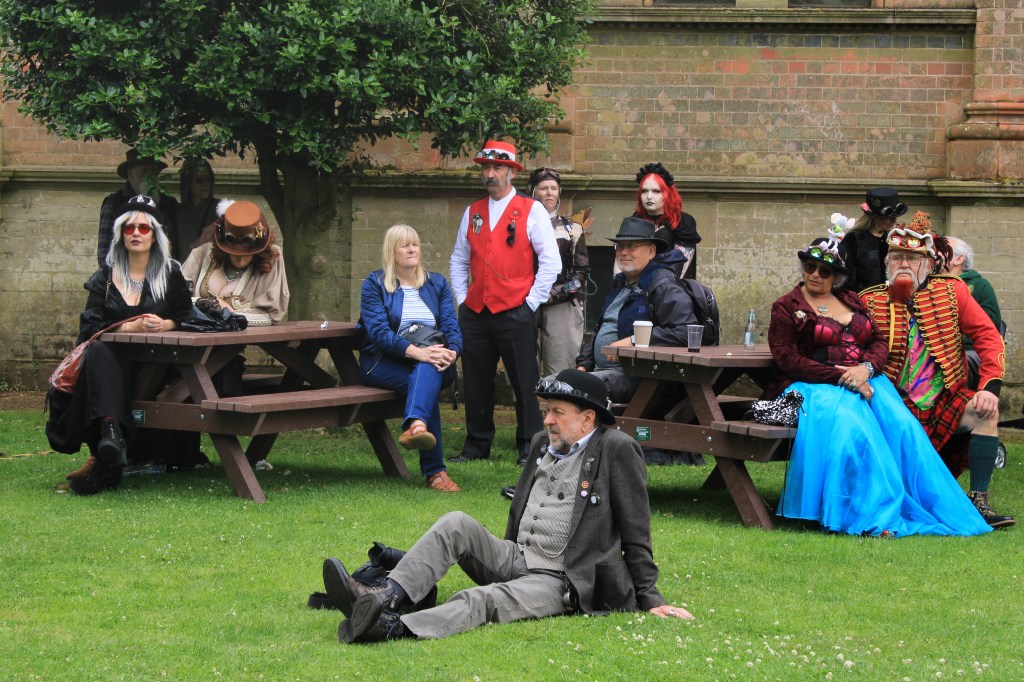
Speaking of Victoriana, that extends to fashion too. We’re talking top hats, pocket watches, corsets, and goggles galore. And they’re just some of the more common motifs from the period.
It actually does steampunk an injustice to try and classify it. Steampunk fashion is about being unique, quirky, and imaginative. I spoke to many people on the day who craft and make their own costumes and designs.
Steampunkers revel in being unique.
I saw one person who had turned a wheelchair into the time machine from the Sci-Fi classic The Time Machine. Another wore a Mandalorian/Steampunk hybrid get-up, while others went for the good old pin-striped shirt and waistcoat look (myself included).

Fashion and photography have been bedfellows for over a century. Although arguably fashion photography began in the nineteenth century, it really made a quantum leap forward in the 1910s with the expanding magazine industry (Hacking, 2021). Magazines like Vogue and Harper’s Bazaar lead the charge, employing many of the period’s most influential photographers. In 1913, Vogue employed its first full-time photographer (Adolph de Meyer), recognising photography as a profession in its own right (Hacking, 2021).
The connection between photography and fashion has been strong ever since.
Steam power
As much as steampunk makes a ‘bowler-tip’ to the past, there’s also a sense of that which is new and innovative.
Steam power put the term “steam” in steampunk after all. It’s hardly a coincidence that an age of rapid industrial revolution and invention should be embraced by the imaginative steampunk brigade. Papplewick Pumping station is an ideal location to illustrate this. Now a museum, but designed in the early 1880s to pump millions of gallons of fresh water every day to the rapidly increasing population of Nottingham. Can you imagine the joy of experiencing fresh water for the first time?
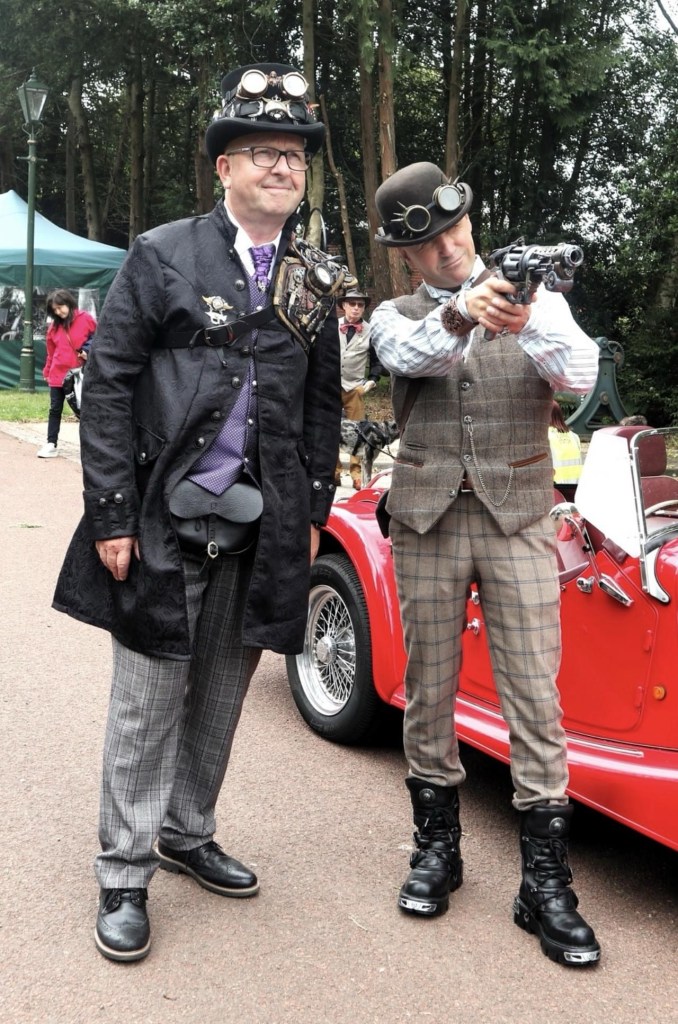
Steampunk events attract new inventions from its followers too, albeit on a smaller scale. Like this chap who invented his own steampunk-themed musket (don’t worry, folks, it wasn’t loaded).
Then there was this amazing motorcycle, for which the creator has gone to enormous effort to capture every whimsical detail. Superb!
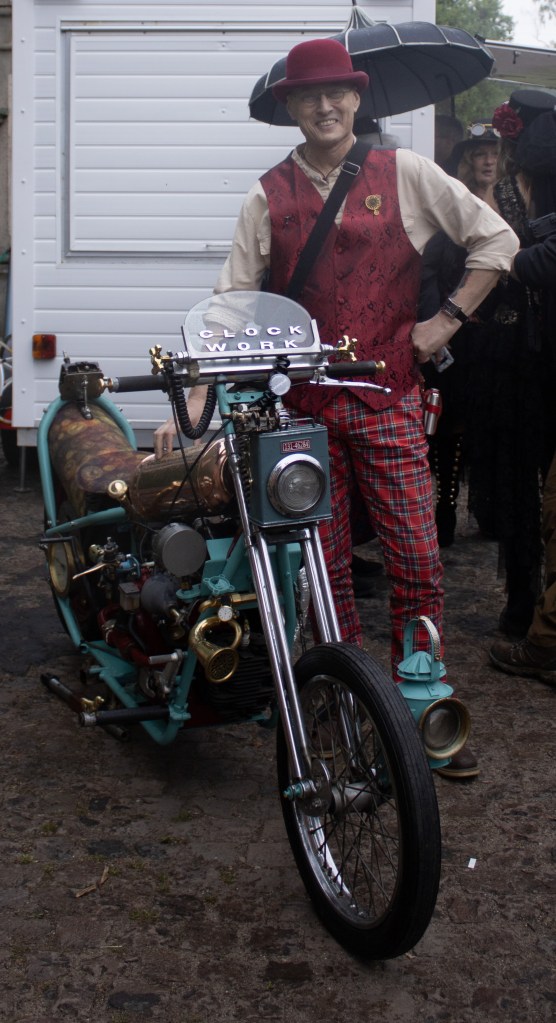
Being inventive is in the steampunk DNA.
Conclusion
Steampunk is more than simple cosplay. Or at least it is for many. It’s a movement, with its own fusion of literature, music, and style, that is rooted in a past that seems so much more elegant than the present.
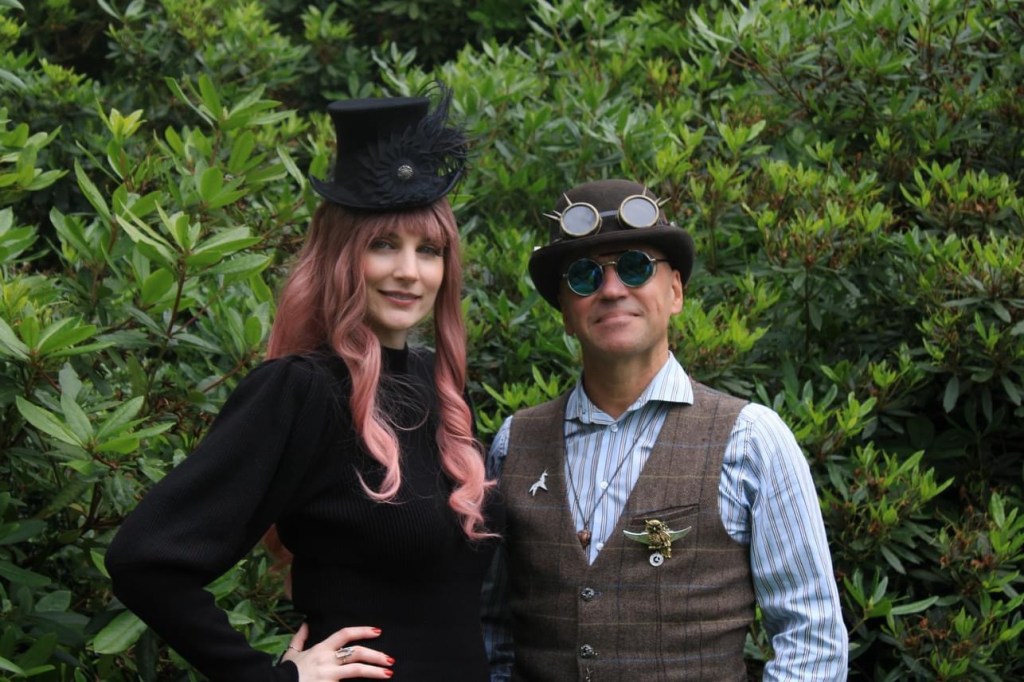
Steampunk is also about individuality and creativity—two qualities that very much resonate with photographers.
The creative, fantastical, and escapist nature that is intrinsic to steampunk is also intertwined in photography. Or at least it should be if you want to take photographs that break from the norm and stand out.
The more I write, the more I realise that the question of why photographers love steampunk is self-evident, for all the reasons above. I guess a much harder question to ask would be, Why wouldn’t photographers love steampunk?
References
Hacking, J. (2021). ‘Photography: The whole story.’ Thames and Hudson Ltd.
Stepan, P (2017). ’50 Photographers You Should Know.’ Prestel
 Scott's Unfinished Pictures