
I’m currently on holiday in Greece reading Debbie Harry’s autobiography, where she refers to photography as “the all-seeing eye.” This recalled Mick Rock’s similar description in a previous post, where he talks about photography as the “all-pervasive beast.” For me, the image conjures up sinister connotations from Tolkien and the eye of Sauron. A kind of unwanted surveillance that is menacing, invasive, and inescapable.
It comes as no surprise that Mick Rock photographed Debbie Harry after the two met. In fact, before his death in 2021, Rock donated five never-before-seen shots, including Debbie Harry, to raise funds for NHS supplies in the wake of the pandemic (see image below). What a legend!
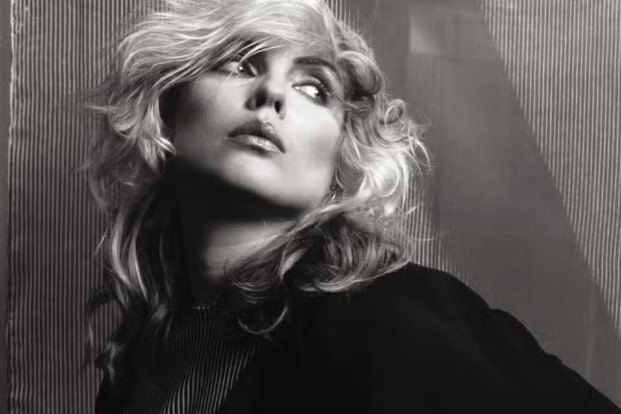
Harry’s reference to the “all-seeing eye” is an interesting one, and I’ve elaborated on the quote below. There’s something quite mundane about being photographed today, at least from Harry’s perspective. Even during my lifetime, I remember when being photographed had a sense of occasion about it. Typically, the camera would only come out at weddings or on holidays. We would never have dreamed of taking a snap of our lunch.
The all-seeing eye. These days it’s inescapable. No one now thinks twice about being photographed, or they think about it so much that when they’re not being photographed , they photograph themselves.
Debbie Harry (2022), ‘Face It’
Harry’s reference implies being photographed is routine and everyday, so much so, that even when people are not being photographed, they “photograph themselves.” This also suggests we have become enslaved by photography.
What does that say about us as a society?
I don’t think Harry’s trying to be negative about photography per se. It’s more of a broader observation on how mainstream photography has become. It’s well documented that Harry’s former boyfriend and fellow Blondie band member, Chris Stein, was an avid photographer. Stein took many great shots of Debbie, which she often compliments in her autobiography.
I think Stein’s photograph of Debbie below captures this view perfectly. Debbie casually strolls past a massive poster of herself and doesn’t even give it a second glance.
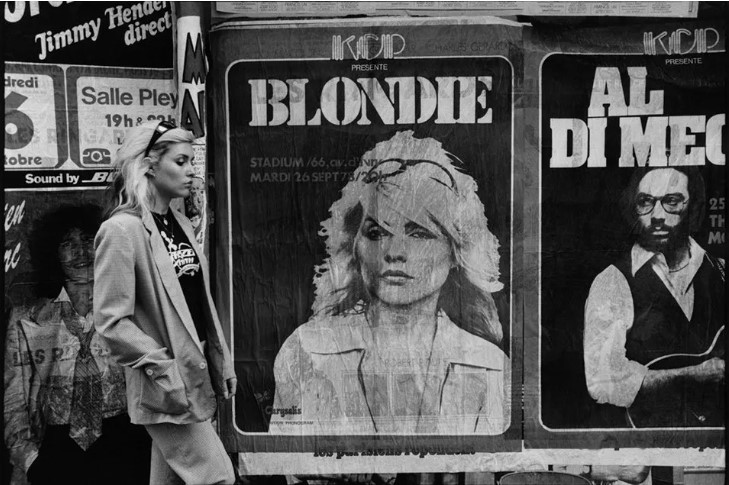
I guess it must have been quite surreal to have been in the public eye as much as she was back then. There are plenty of stories in her autobiography about how her privacy was invaded. The tensions she faced between having the freedom to choose how to look and what image the record companies wanted to present of her are also evident.
They [the record companies] had not been expecting such a departure from cute, hot little Blondie. They were not enthusiastic at all about my dark hair; they thought it would confuse the fans. They wanted Debbie Harry, not Dirty Harry.
Debbie Harry (2022),’Face It’
Perhaps that’s part of the allure of photography: trying to decode the image in order to discover the real person portrayed.
Are we the “all-seeing eyes”?
Although Stein is arguably not as famous a photographer as Mick Rock, in many ways I like his images of Debbie more. I think it’s because he knew her on a personal level and he understood her in a way that other photographers didn’t.
Stein’s photographs of Debbie are loaded with an emotional connection.
Debbie understood this too, and in a strange way seeing Stein’s photographs of her so often not only told a story about her, it told one about him too and his view of her.
I got used to seeing myself through the way he [Chris Stein] saw me, which I guess also makes me an observer, or an observer once removed. That is one of the interesting by-products of being a subject – being able to look at yourself through someone else’s eyes.
Debbie harry (2022), ‘Face It’
It’s clear reading her book that the two of them are soul mates and still have so much affection for each other. It’s touching to read, but it’s also touching to see in his photographs.
Perhaps she partly meant Chris by “the all-seeing eye” too, because he saw, and captured in photographs, her true self.
 Scott's Unfinished Pictures
Interesting post, Scott. I saw Debbie Harry in concert in college way back in the mid-70s. Love the portraits of her you posted.
LikeLiked by 1 person
Thank you Jane. I’m envious! I bet it was an amazing gig. Did you see her play at CBGBs or was it somewhere else?
LikeLike